
Observe
Enter the memory field
Move through
Body, fabric and projection
Choose
Touch or keep a distance
Contribute
An optional digital archive
- Exploratory research
- 6 interviews
- Website test
- 5 participants
- Final master’s project
- 9/10
Context and design decisions
PROJECT OVERVIEW
How can participation around discrimination feel meaningful without becoming extractive?
Connect spatial storytelling, optional touch and an anonymous digital contribution.
6 interviews · 5 website participants · Master’s final project 9/10.
KEY DESIGN DECISIONS
Use fabric, partial visibility and symbolism instead of literal reenactment.
Keep touch and contribution optional.
Let technology support the encounter rather than take over it.
- TOOLS
- Spatial, 3D, projection and digital prototyping
- WHAT I MADE
- An installation proposal and a working contribution website, developed from Team Abraxás’s brief.
- EVIDENCE & STATUS
- Six exploratory interviews; a website test with five participants. The full installation remains unbuilt.
- COLLABORATION
- Project partner: Team Abraxás · Academic supervision: Natàlia Herèdia López, PhD.
Body, text and touch share the space
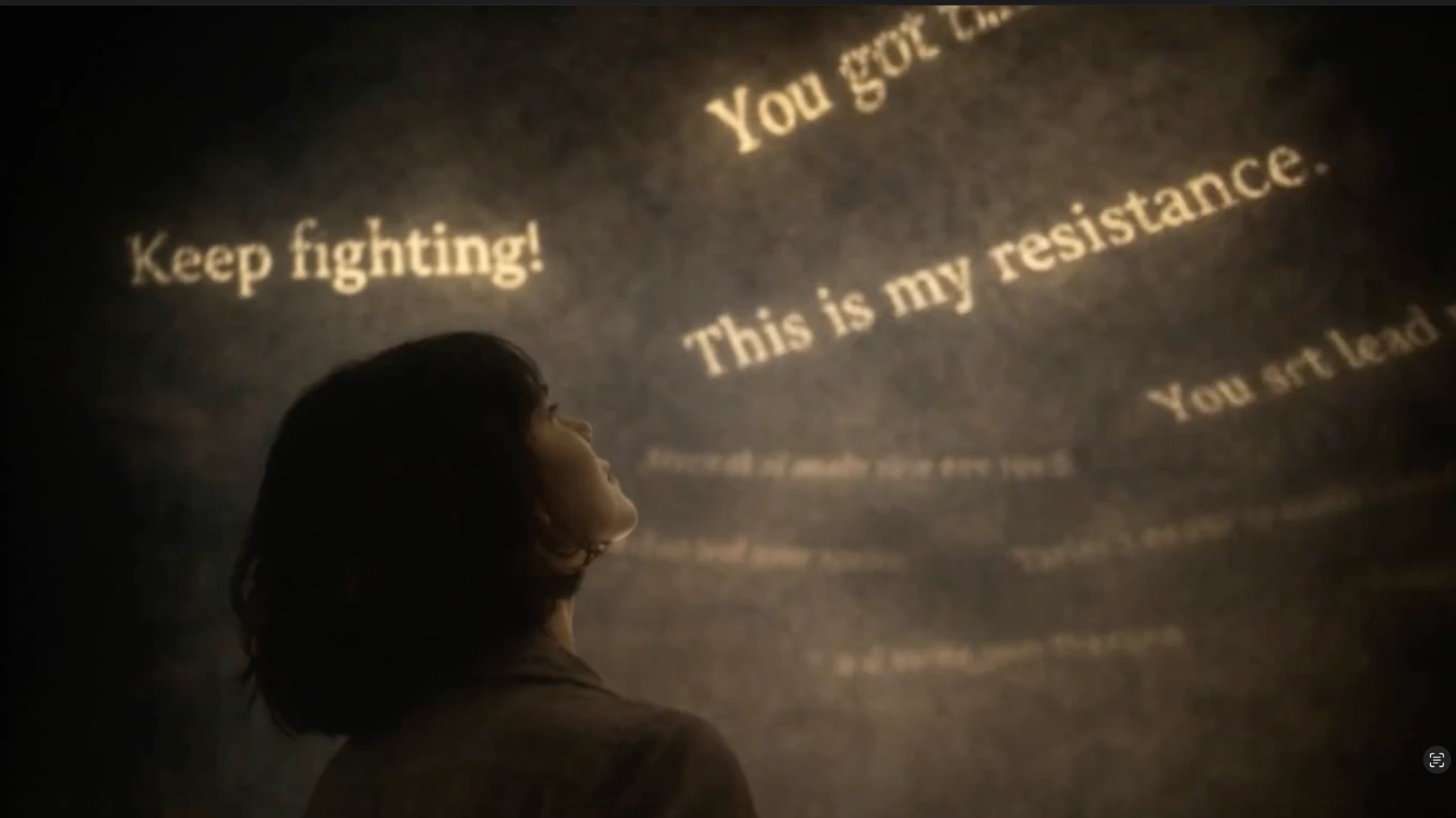
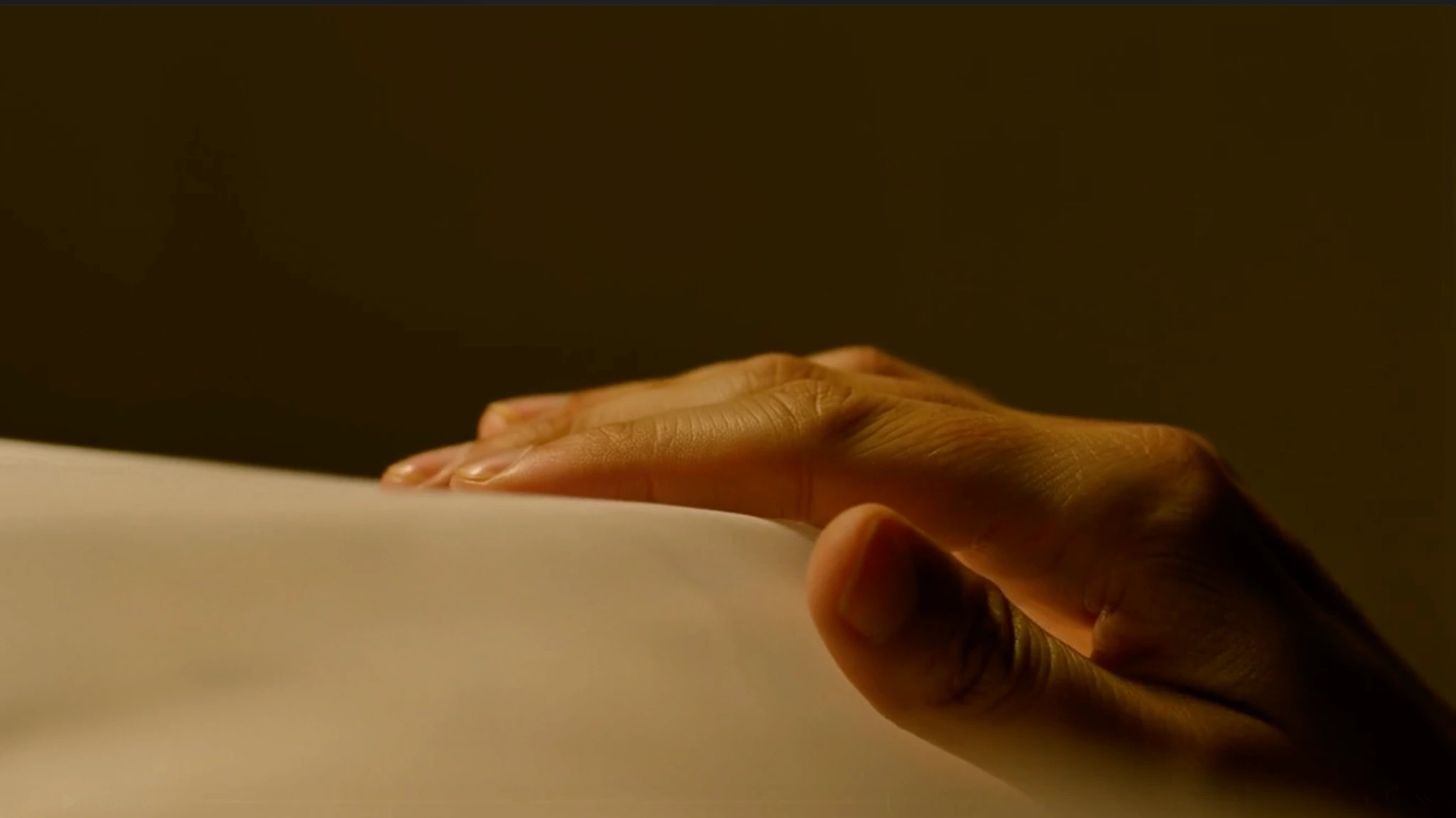
From interview to decision
Six interviews shaped three rules: slow down, stay anonymous and choose how to participate.
Slow the pace
Darkness, quieter sound and room to pause.
Keep it anonymous
No profile or public identity is required to contribute.
Leave a choice
Visitors decide whether to look, touch, write or listen.
Master’s final project · 9/10 · full installation not yet built.
Read the thinking
Suggest enclosure without reenacting trauma
I moved away from literal restroom scenes. Fabric, partial visibility and a symbolic collective body kept the idea of confinement without reenacting it.
A physical encounter. A digital continuation
ALÇAR responds to the Barcelona segment of Mobilizations and Lockdowns, developed as my Master’s final project at LCI Barcelona from a brief with Team Abraxás.
My role covered research, experience strategy, spatial and interaction design, the digital prototype and visual identity, under academic supervision by Natàlia Herèdia López, PhD.
How can remembering become an embodied, voluntary act of participation?
- 6, Exploratory interviews
- 5, Digital prototype participants
- 9/10, Final Master’s project grade
Proposal and prototype stage. The website was tested; the full scale spatial experience has not yet been built or validated.
What shaped the invitation
Six exploratory interviews, benchmarking and prototyping shaped the design. A later Maze test involved five participants and covered only the website.
“I want to learn about this through my body, not just through my brain.” (P1)
| Research insight | Design response |
|---|---|
| Emotional fatigue | Slow pacing, darkness and restraint; no shock imagery. |
| Fear of exposure | Anonymous participation by default. |
| Distrust of spectacle | A symbolic collective body, without reenactment. |
| Embodied learning | Space, material, sound and touch. |
| Interpretive autonomy | Fragments instead of one fixed narrative. |
| Emotional safety | At your own pace movement and optional interaction. |
Learn from a precedent. Keep a point of view
The precedents helped move the concept away from literal confinement towards fabric, partial visibility and a symbolic collective body.
| Reference | Lesson / limit | ALÇAR response |
|---|---|---|
| Anne Frank House | Intimacy and ethical entry / literal reconstruction | Make entering a responsibility rather than a spectacle. |
| Casa Batlló | Space and sound / spectacle focused polish | Use light, material and sound without visual excess. |
| Darkfield | Darkness and sensory delay / uncalibrated intensity | Slow attention while preserving safety. |
| teamLab | Nonlinear meaning / visual abundance | Let fragments connect through movement. |
| Holocaust Museum | Silence and ethical pacing / witnessing as endpoint | Move from witness toward responsibility. |
Two rooms. One encounter
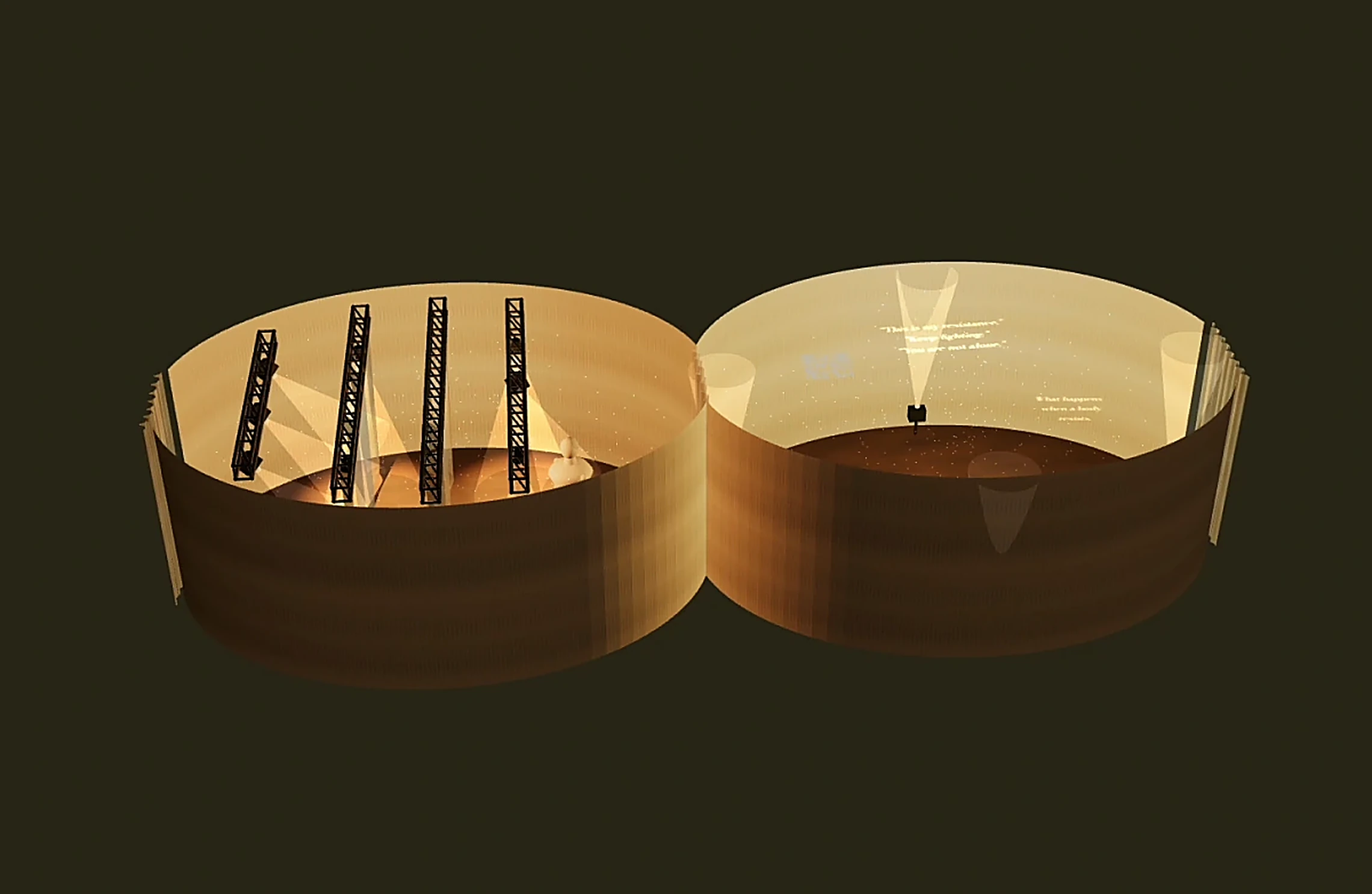
Spatial proposal; the full scale installation has not yet been built.
Read the thinking
Two rooms. One continuous encounter
The subject depends on bodies, distance, fabric, darkness and shared presence, so I kept the experience physical rather than translating it to a screen.
Room 01 is a memory field of fabric, historical traces and a symbolic body. Travessia marks the crossing into reflection. Room 02 holds the collective archive: writing, projected voices and an optional contribution.
A spatial model, not a built exhibition. Circulation and access require full scale verification. Thesis pp. 40 to 48 and 57 to 64.
A journey with choice
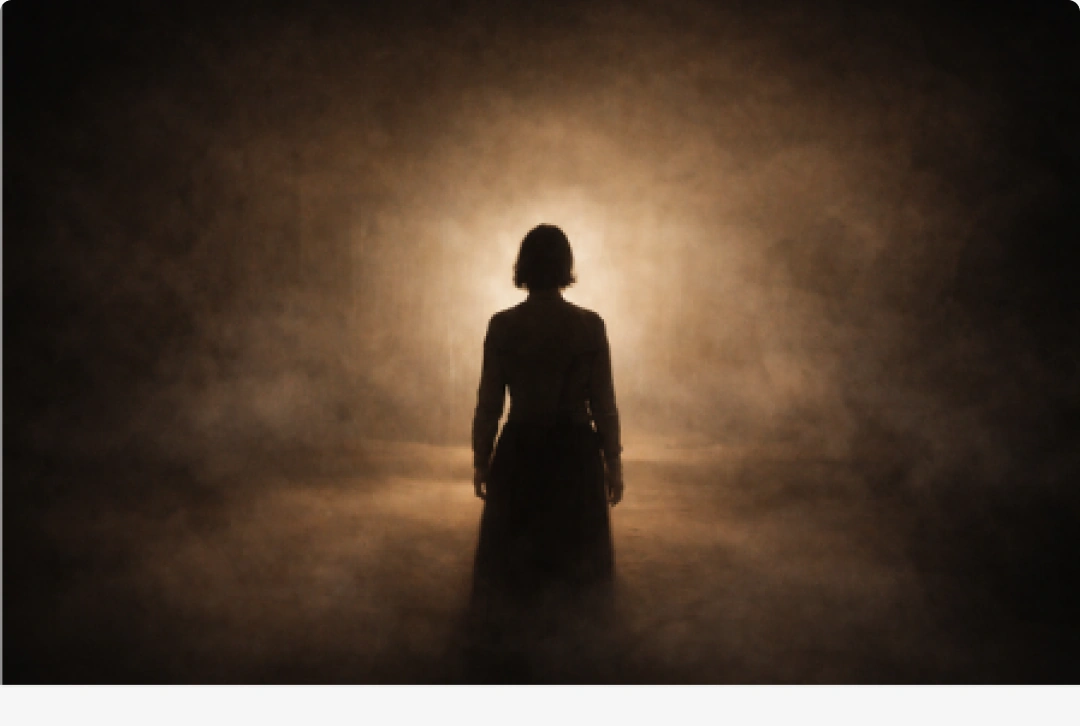
Threshold
Enter, pause or continue.
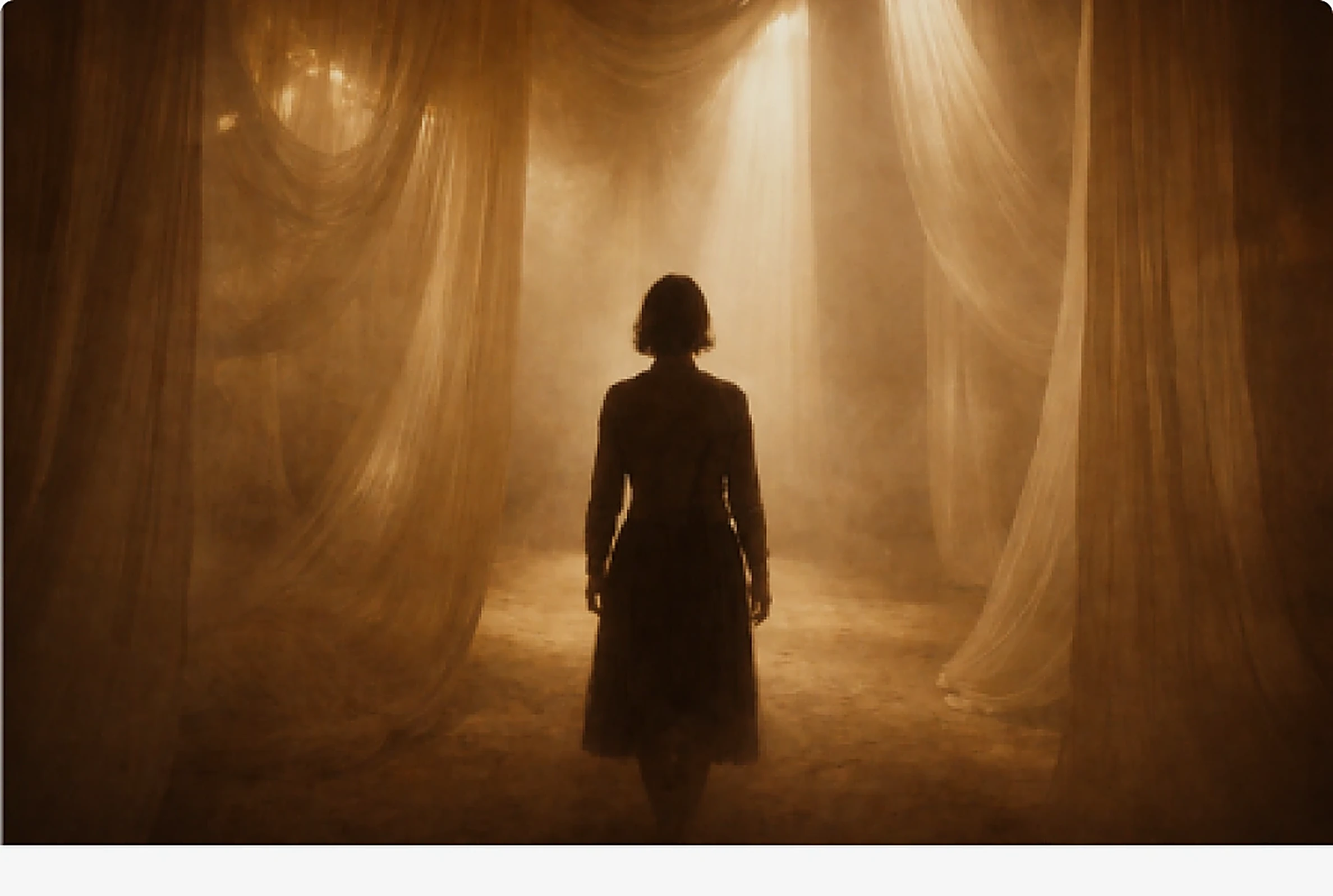
Orientation
Explore fabric and light.
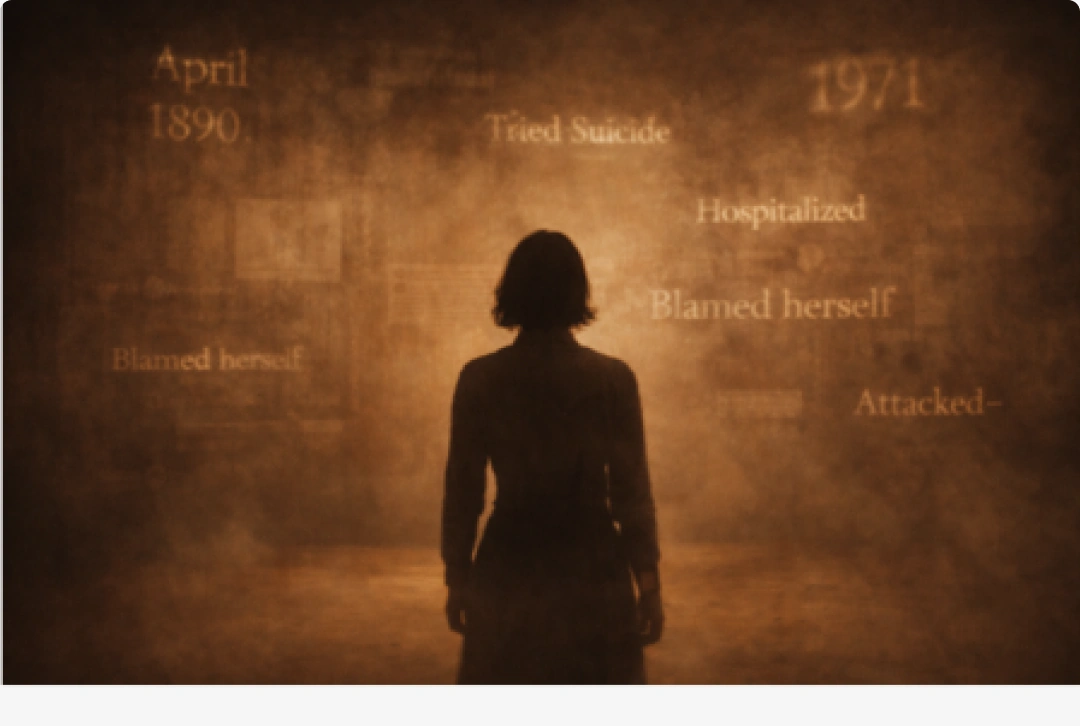
Traces
Connect words and voices.
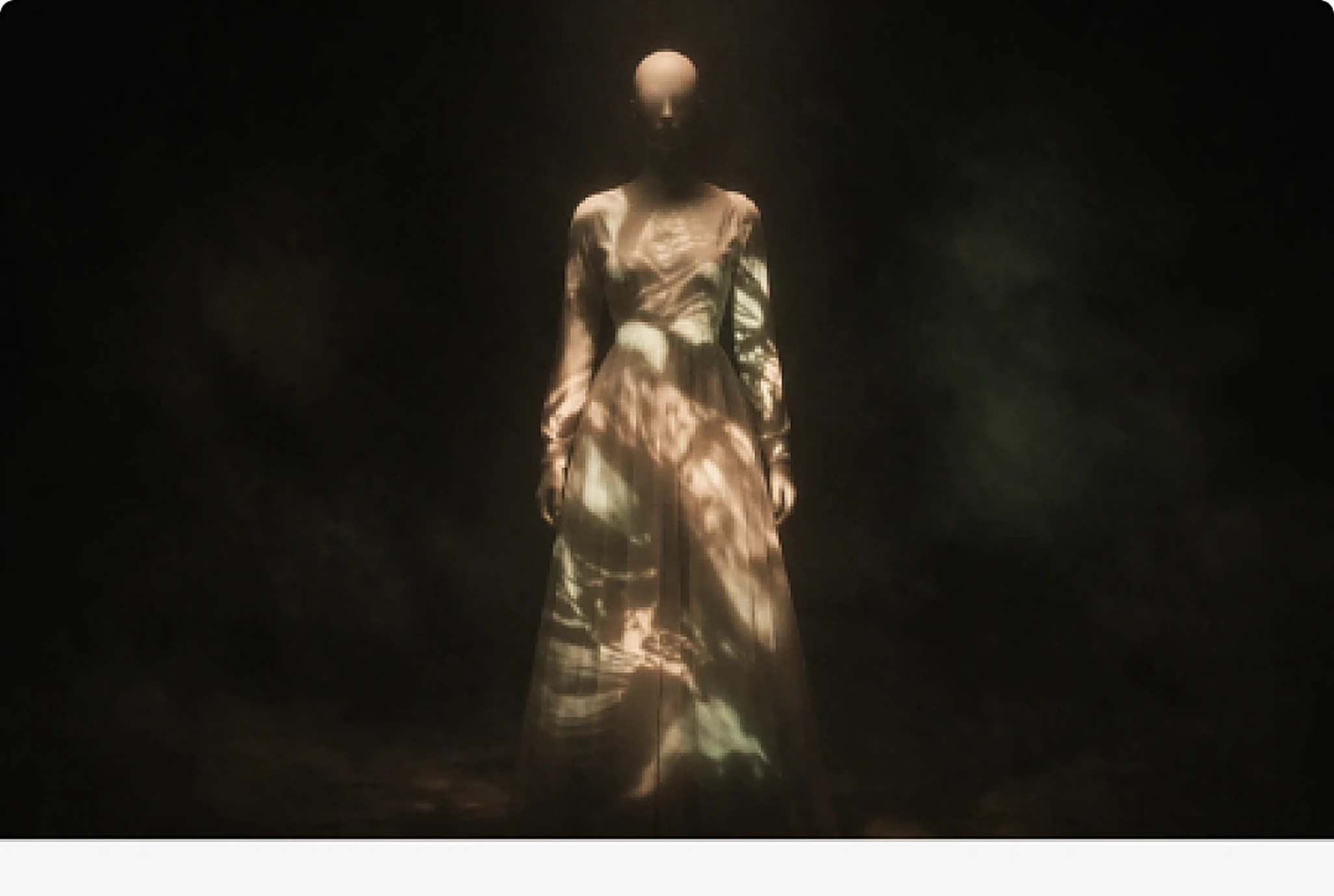
Suspension
Approach or keep a distance.
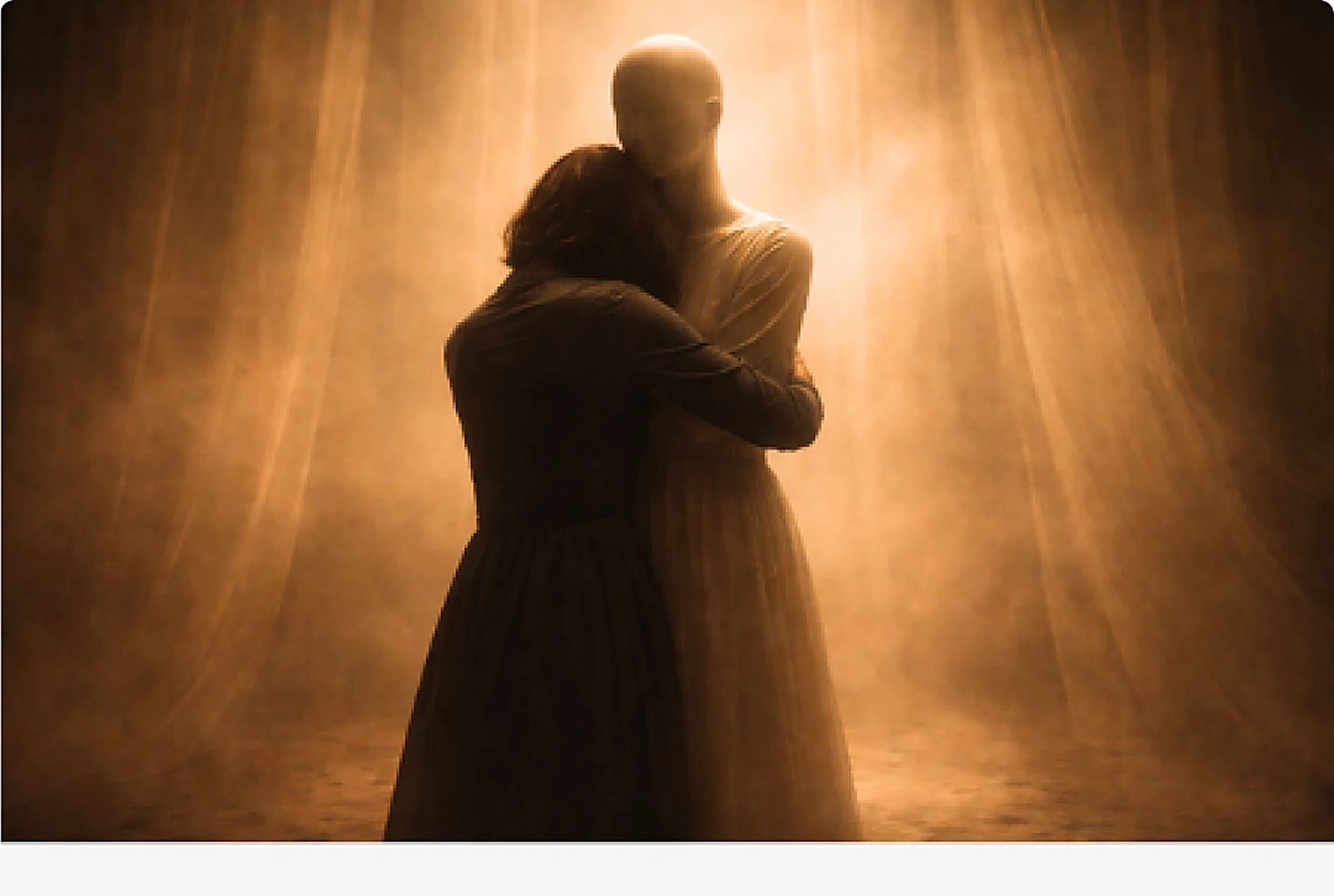
Recognition
Touch remains optional.
Archive
Read or leave a voice.
Conceptual sequence. The complete installation has not yet been built.
Open the complete storyboard
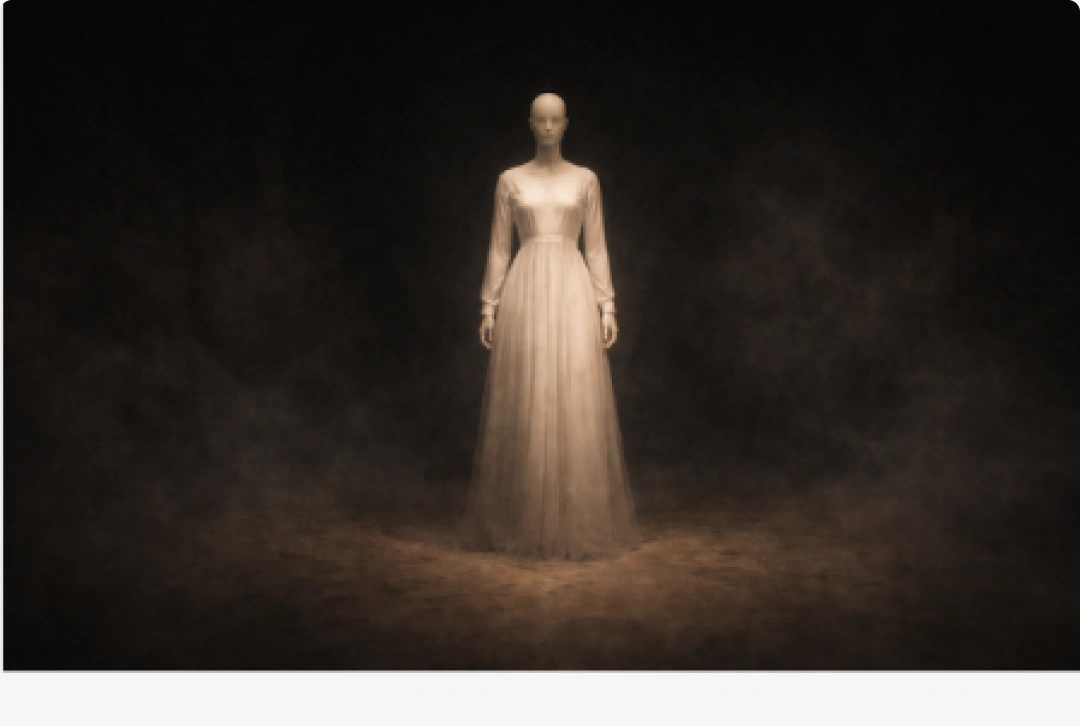
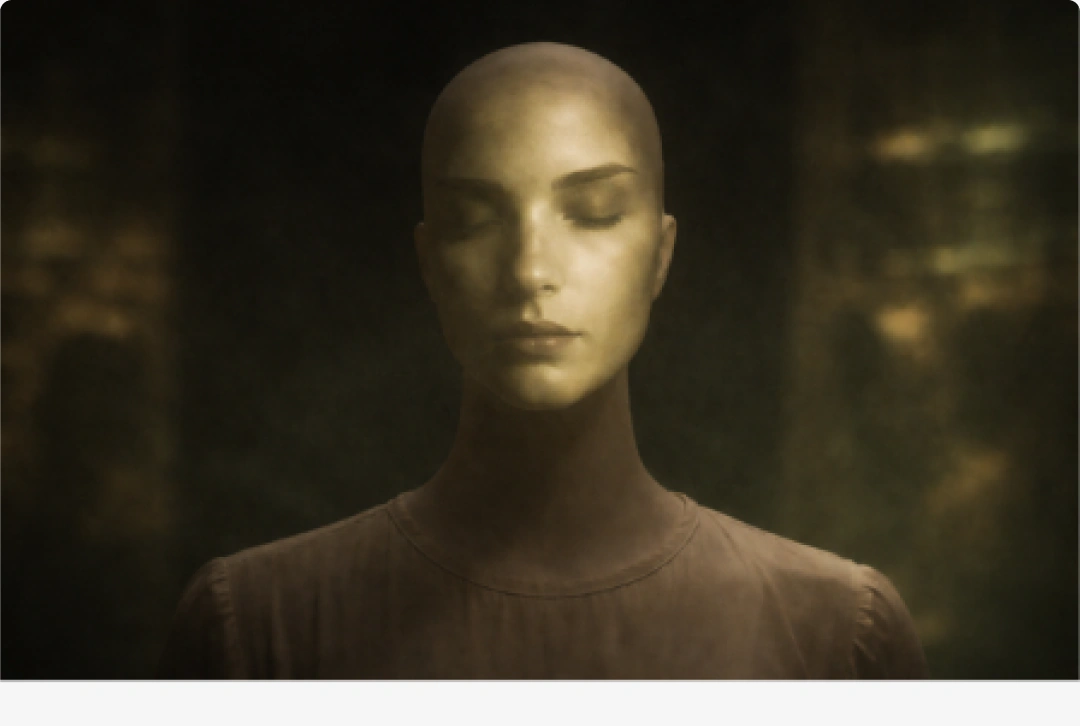
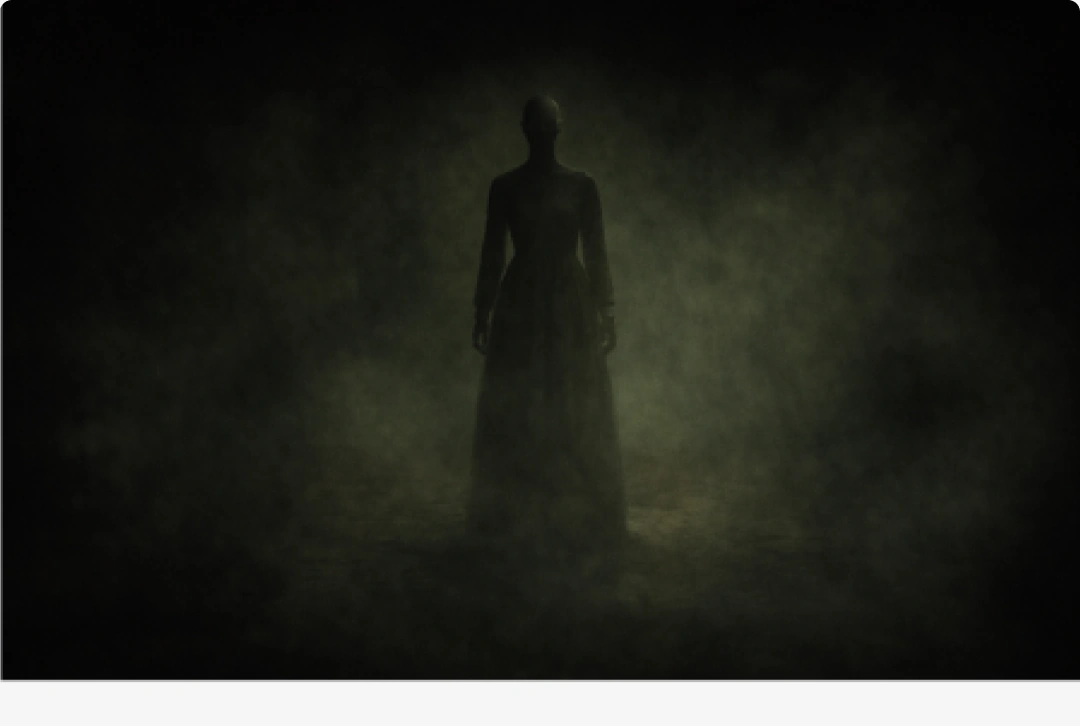
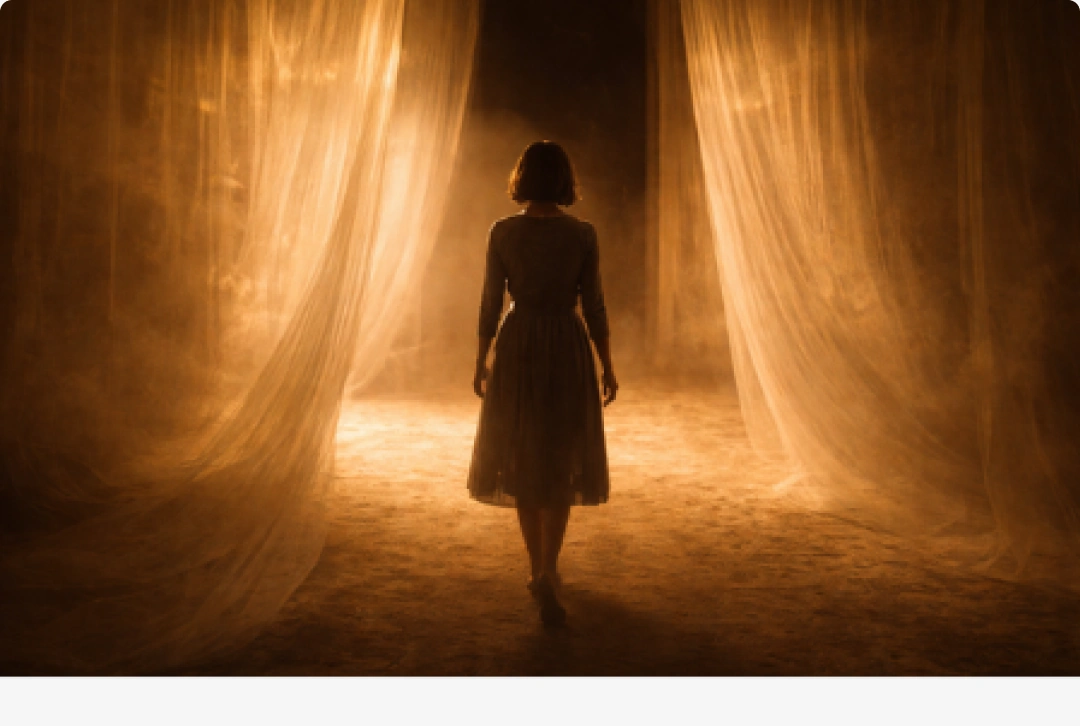
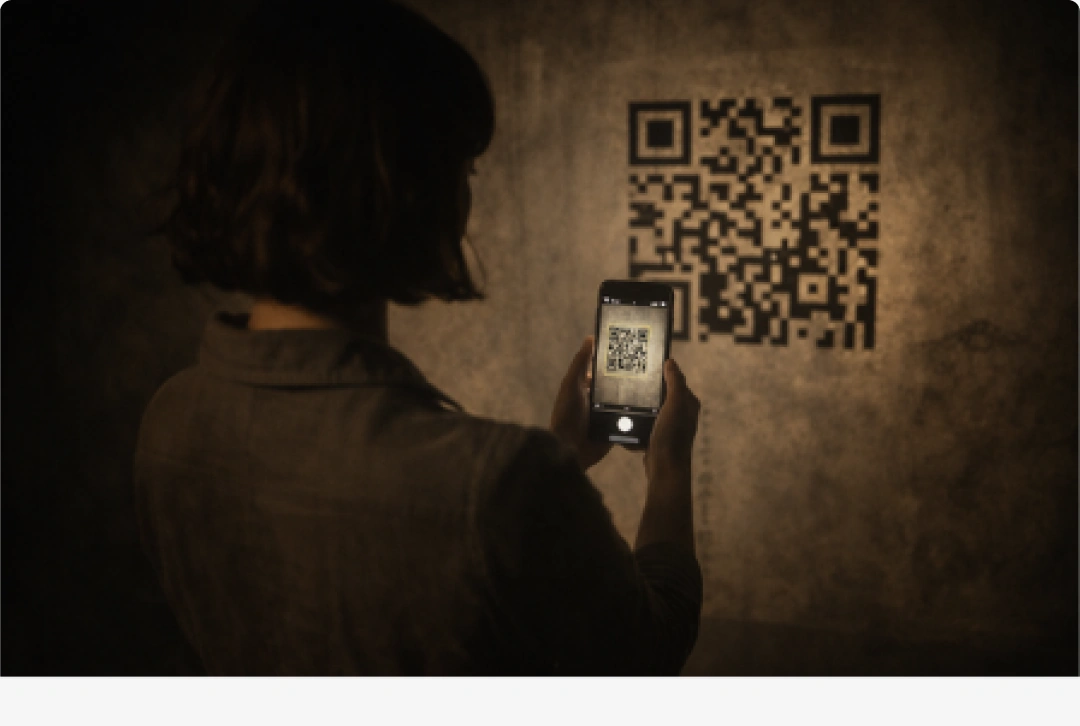
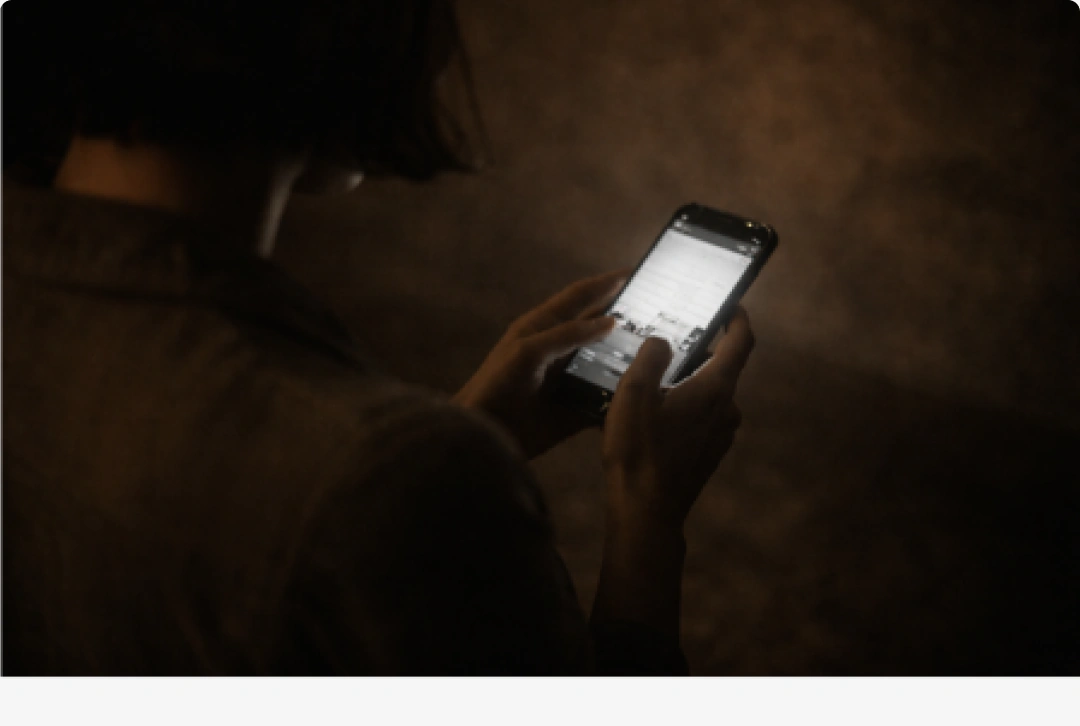
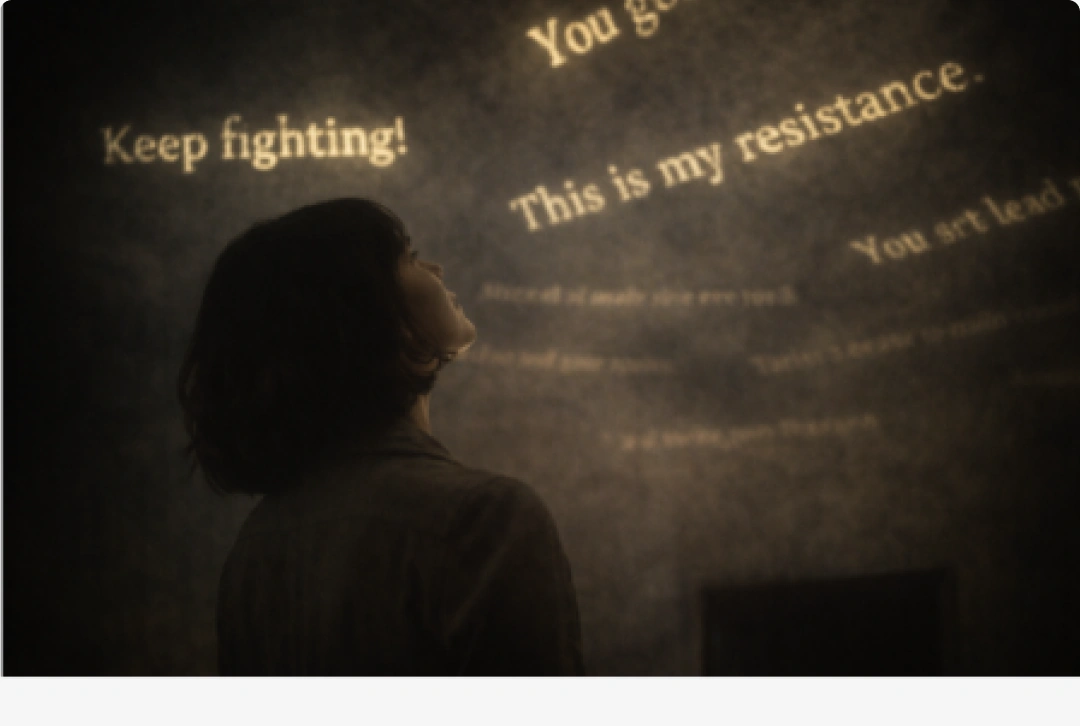
Storyboard imagery shows concept direction, not a completed installation.
Read the thinking
Six beats. No single correct way through
The sequence moves from observer to witness and, optionally, participant or contributor. Each phase keeps visitor choice visible.
The affective curve is a design model, not measured visitor data. Sound levels and acoustic behaviour still need calibration in a built room.
- 01 / Threshold
- Enter a darker, quieter field. Darkness, heartbeat, a low drone and breath interrupt everyday speed. Stop, leave or continue.
- 02 / Orientation
- Navigate translucent fabric, warm light and distant piano. The body learns the space before explanation; no route is prescribed.
- 03 / Historical traces
- Dates, words and fragmented voices ground the experience. Projection, whispers and a clock pulse invite visitors to connect the fragments.
- 04 / Suspension
- Meet the collective body as sound recedes. Stillness and partial visibility make silencing perceptible. Approach or remain distant.
- 05 / Recognition
- Choose whether to touch or embrace. Breath, soft strings and a gradual response frame acknowledgement, without rescue or reward.
- 06 / Archive
- Scan, write and submit, or read other voices. Contributions are anonymous by default; writing remains optional.
Optional touch. Gradual response
- 01 / GESTURE Touch or embrace
- 02 / SIGNAL Sensor / Arduino
- 03 / RESPONSE Light and sound grow
Leave a word. Watch it become light
A small sketch of the anonymous, optional interaction. Words fade rather than being saved or shared.
Read the thinking
The gesture is acknowledgement
Beat 5 is the most intense moment, after the memory field has built context. It moves through dress, face, silence, optional touch and then the archive.
Light starts at the chest and spreads across the white dress. A symbolic face moves through fear, pain, anger, anguish and resistance without speech; silence carries part of the pressure.
A hidden sensor reads an optional touch or embrace. Light and sound increase gradually, without score, reward or completed state.
- Prototyped
- Dress projection, symbolic face sequence and Arduino touch interaction.
- Still to test
- Whether the gesture reads as recognition, and whether the full sensory sequence feels safe.
The archive continues online
A place for
your voice
- 01Read the archive
- 02Write at your own pace
- 03Choose whether to sign
Read the thinking
Technology stays behind the experience
The physical system changes the room through an optional gesture. The digital system carries a private response into a shared archive. The phone arrives after reflection, at the end of the spatial encounter.
- Physical response
- Approach / optional touch or embrace / hidden capacitive or pressure sensors / Arduino signal / gradual light and sound response.
- Digital archive
- QR, short URL or physical card / write / Supabase storage / moderation / Processing / projection / ongoing Voices archive.
| Archive safeguard | Design decision |
|---|---|
| Anonymous by default | A name remains optional. |
| No social ranking | No profiles, likes or popularity order. |
| More than QR | A short URL and physical cards provide alternative access. |
| Moderated archive | Harmful submissions must be reviewed before public activation. |
| Separated data | Waiting list contact details stay apart from archive contributions. |
Presence and absence
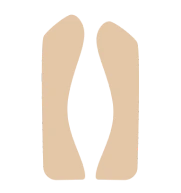
The symbol carries the same ideas of body, fabric and protection as the space.
Read the thinking
Presence, absence and the space between
Partial visibility, warm low light and negative space connect the identity to the installation. Two lateral forms hold a central void, suggesting body, fabric, absence or protection without a literal figure.
Lora carries titles and short statements; Inter handles interface text, captions and data. Warm beige, amber and brown mark entry and memory, while olive, dark green and terracotta deepen the register around the body.
The white dress works as garment, projection surface, skin and archive, chosen for how it receives light rather than as a symbol of purity.
What the tests revealed
Mean ratings
out of five.
Scale: 0–80 s · 5 participants · different tasks, not a before/after comparison.
Five website participants only. The physical installation and funding decision remain pending.
What the website test changes
Design responses identified after the five-person test. These changes still need a comparable retest.
Finding the contribution entry
A clearly labelled “Add your voice” action
Can someone find where to contribute without help?
Finding project context
Direct Stories and About routes alongside poetic labels
Can someone explain what the project is before participating?
Submitting on mobile
Submit below the field, followed by confirmation
Does someone recognise that their contribution was sent?
Read the thinking
The website was readable, but some actions were still hard to find
I tested the website remotely in Maze with five participants and four navigation tasks. This does not validate the immersive installation.
Finding where to contribute took a reported 63.9 seconds; reaching project context took 42.6 seconds. These are different tasks on the same 0 to 80 second scale, not a before and after comparison.
- Participation entry
- Make “Add your voice” a clearly labelled primary action.
- Clickability
- Strengthen contrast and use consistent states, particularly around Visit.
- Context access
- Offer direct Stories and About routes from Home, alongside poetic labels.
- Mobile submission
- Place Submit below the field and provide clear confirmation.
What exists now
ALÇAR is at prototype stage: the spatial system, live website, interaction logic and communication system are working or documented. The full installation remains unbuilt.
- ≈ €76,090, Design stage first exhibition estimate
- 100 to 150 m², Indicative controlled light venue
- 8 to 12, Proposed first full scale pilot
- Live / Website
- Home, Write, Voices, Stories, About and Visit, with an anonymous contribution flow and public prototype.
- Prototyped / Experience
- Interactive 3D spatial model, Arduino touch interaction, dress projection and symbolic face animation.
- Documented / Production
- Technical architecture, archive moderation plan, accessibility priorities and communication campaign.
- Pending / Installation
- Integrated build, projection and sound calibration, visitor study, emotional and accessibility validation.
Feasibility and budget are thesis estimates; a larger visitor study would follow a built pilot.
Build the room. Then test the experience
The EU funding application is pending. If selected, the next phase would be a full scale build, an 8 to 12 visitor pilot and then a larger study after refinement.
Design the transitions. Keep participation voluntary. Test the room before claiming impact.
- Observation
- Does the six beat sequence read clearly?
- Dwell time
- Does the space slow attention?
- Movement map
- Where do people hesitate or leave?
- Interview
- How are touch, meaning and intensity interpreted?
- Contributions
- Is the archive understood and used voluntarily?
- Accessibility
- Do physical, sensory and digital access routes work?
The full scale validation protocol has not yet been run.